Automatic Tension Controller
Expertise in Gear Motors, Slides, and Industrial Automation Quality Services & Better Solutions.
Automatic Tension Controller (Model: LTC858A & DTC-E18)
An automatic tension controller (ATC) is a device used in industrial processes to maintain consistent tension in materials such as paper, film, wire, or textiles as they move through various production stages. Proper tension control is crucial to ensure quality, prevent material damage, and
Tension Measurement:
The ATC continuously monitors the tension in the material being processed using various sensors or transducers. Common methods include load cells, dancer rollers, ultrasonic sensors, or tension-sensitive rollers.
Control System:
The tension measurement data is fed into a control system, which compares the actual tension with a predefined setpoint or target tension level. The control system calculates any deviation between the actual and desired tension.
Actuation:
Based on the deviation calculated, the control system activates actuators to adjust tension accordingly. These actuators can include pneumatic brakes, electromagnetic clutches, servo motors, or other devices capable of applying or releasing tension as needed.
Feedback Loop:
The control system continuously adjusts the tension by modulating the actuator based on real-time feedback from the tension measurement sensors. This closed-loop feedback mechanism ensures that the tension remains stable and within the desired range throughout the production process.
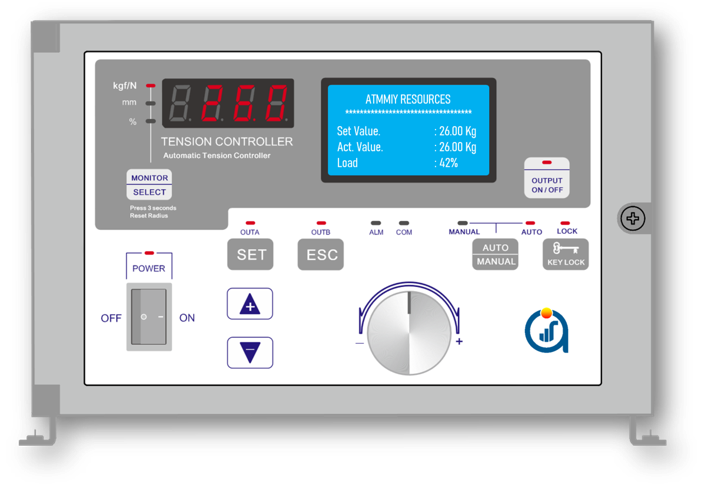
Automatic tension controllers are commonly used in various industries, including printing, packaging, textile manufacturing, wire and cable production, and converting processes.